
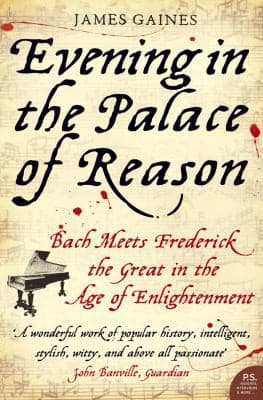
Evening in the Palace of Reason
Bach Meets Frederick the Great in the Age of Enlightenment
Esta parte de readmunity es para lectores con cuenta.
Con una cuenta gratuita puedes guardarlo en tu biblioteca, valorarlo y reseñarlo.
Sinopsis(en Inglés)
No tenemos la sinopsis en tu idioma: se muestra la de la edición original.
"James R. Gaines's Evening in the Palace of Reason sets up what seems to be the ultimate mismatch: a young, glamorously triumphant warrior-king, heralded by Voltaire as the very It Boy of the Enlightenment, pitted against a devout, bad-tempered composer of "outdated" music, a scorned genius in his last years, symbol of a bygone world. The sparks from their brief conflict illuminate a pivotal moment in history." "Behind the pomp and flash, Prussia's Frederick the Great was a tormented man. His father, Frederick William I, was most likely mad; he had been known to chase frightened subjects down the street, brandishing a cane and roaring, "Love me, scum!" Frederick adored playing his flute as much as his father despised him for it, and he was beaten mercilessly for this and other perceived flaws. After an unsuccessful attempt to escape, Frederick was forced to watch as his best friend and coconspirator was brutally executed." "Twenty years later, Frederick's personality having congealed into a love of war and a taste for manhandling the great and near-great, he worked hard and long to draw "old Bach" into his celebrity menagerie. He was aided by the composer's own son, C. P. E. Bach, chief keyboardist in the king's private chamber music group. The king had prepared a cruel practical joke for his honored guest, asking him to improvise a six-part fugue on a theme so fiendishly difficult some believe only Bach's son could have devised it. Bach left the court fuming. In a fever of composition, he used the coded, alchemical language of counterpoint to write A Musical Offering in response. A stirring declaration of everything Bach had stood for all his life, it represented "as stark a rebuke of his beliefs and worldview as an absolute monarch has ever received." It is also one of the great works of art in the history of music." "Set at the tipping point between the ancient and the modern world, the triumphant story of Bach's victory expands to take in the tumult of the eighteenth century: the legacy of the Reformation, wars and conquest, and the birth of the Enlightenment. Most important, it tells the story of that historic moment when Belief - the quintessentially human conviction that behind mundane appearances lies something mysterious and awesome - came face to face with the cold certainty of Reason."--BOOK JACKET
Citas
Todavía nadie ha guardado citas de este libro. Añádelo a tu biblioteca y podrás apuntar aquí los pasajes que quieras recordar.
Reseñas
Todavía no hay reseñas de este libro.


