
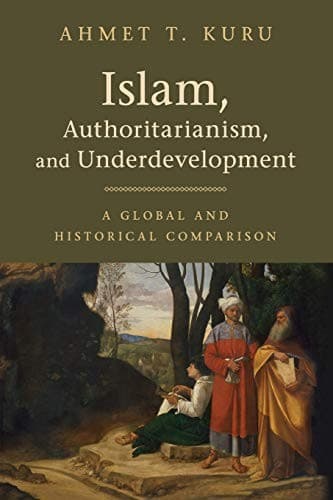
Islam, Authoritarianism, and Underdevelopment
A Global and Historical Comparison
Esta parte de readmunity es para lectores con cuenta.
Con una cuenta gratuita puedes guardarlo en tu biblioteca, valorarlo y reseñarlo.
Sinopsis(en Inglés)
No tenemos la sinopsis en tu idioma: se muestra la de la edición original.
"Why do Muslim-majority countries exhibit high levels of authoritarianism and low levels of socio-economic development in comparison to world averages? Ahmet T. Kuru criticizes explanations which point to Islam as the cause of this disparity, because Muslims were philosophically and socio-economically more developed than Western Europeans between the ninth and twelfth centuries. Nor was Western colonialism the cause: Muslims had already suffered political and socio-economic problems when colonization began. Kuru argues that Muslims had influential thinkers and merchants in their early history, when religious orthodoxy and military rule were prevalent in Europe. However, in the eleventh century, an alliance between orthodox Islamic scholars (the ulema) and military states began to emerge. This alliance gradually hindered intellectual and economic creativity by marginalizing intellectual and bourgeois classes in the Muslim world. This important study links its historical explanation to contemporary politics by showing that, to this day, ulema-state alliance still prevents creativity and competition in Muslim countries."--
Citas
Todavía nadie ha guardado citas de este libro. Añádelo a tu biblioteca y podrás apuntar aquí los pasajes que quieras recordar.
Reseñas
Todavía no hay reseñas de este libro.

